Mold Removal & Remediation in Belleville
Old East Hill character homes, Old West Hill basements, and the postwar streets north of Dundas each grow mold differently in Belleville — we inspect for the actual cause before recommending any work.
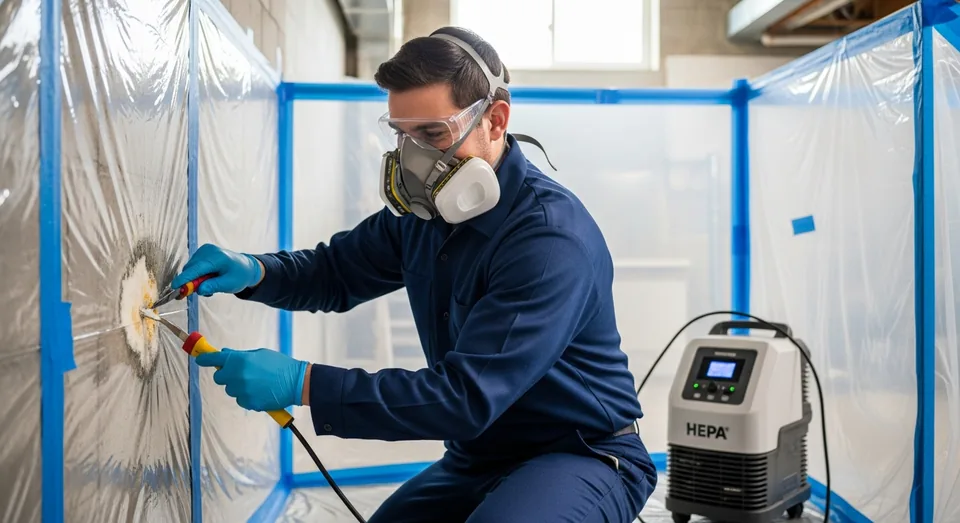
Belleville grows mold in very particular places: the under-ventilated attics of its thousands of post-war bungalows, the finished basements of Old East Hill, Old West Hill and the postwar streets north of Dundas, and the duplexed rentals where two households' worth of showers and cooking push humidity into spaces never built for it. Knowing where to look matters — and removing the mold without fixing the moisture just books a rematch.
Our Mold Removal Services
Professional mold removal services for homeowners across Belleville.
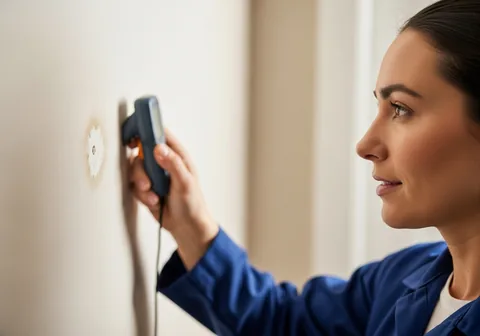
Mold Inspection
A full moisture inspection tailored to your home's age and construction, not a generic checklist.
Learn more →
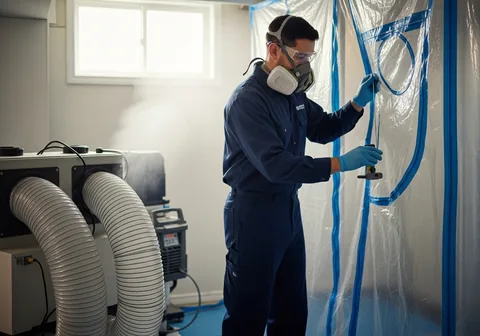
Mold Remediation
HEPA-filtered, fully contained removal — the same protocol whether it's an Old East Hill character home or a postwar bungalow.
Learn more →

Air Quality Testing
Independent air testing before and after, so you know the numbers, not just our opinion.
Learn more →
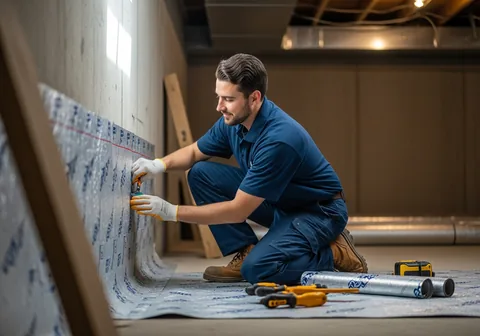
Moisture Control
Fixing the humidity or leak source behind the mold, so you're not paying for the same remediation twice.
Learn more →
Where Mold Grows in Belleville Homes
Post-war bungalow attics. Drive any street in the older suburbs between downtown Belleville and Waterloo and you're looking at 1950s–60s bungalows built with a few gable vents, thin insulation, and no thought to air sealing. All winter, warm humid air from the house leaks up through pot lights, attic hatches and top plates, hits the cold sheathing, and condenses. In a hard January cold snap it builds as frost; when a thaw comes, it melts — homeowners call us about "roof leaks" in -15°C weather that are actually attic rain. By the time the black staining on the sheathing is visible, the pattern has usually been repeating for years. Attic remediation here means cleaning or treating the sheathing, but just as importantly air-sealing the ceiling plane and correcting ventilation so the cycle stops.
Finished basements in Old East Hill, Old West Hill and the postwar streets north of Dundas. Belleville’s 1960s–80s neighbourhoods are full of basements finished decades ago — carpet on concrete, vapour barriers in the wrong place, wood strapping tight to foundation walls. Concrete wicks ground moisture year-round, and summer humidity condenses on cool below-grade walls behind the finishes. The mold grows hidden on the back of drywall and under carpet, and often announces itself only as a musty smell or allergy symptoms that ease when you leave the house. We inspect with moisture meters and borescopes before cutting, so demolition is surgical rather than wholesale.
Duplexed homes and student rentals. Belleville's rental market has converted many single-family basements into apartments, and rental demand keeps them full. Extra occupants mean extra showers, cooking and drying laundry — often in basement suites with one small bathroom fan and windows that stay shut. The results are predictable: condensation mold on cold corners, closets and window frames. For landlords we pair remediation with practical ventilation fixes and humidity guidance, because a re-occurrence complaint six months later helps nobody.
Our approach: inspect, test, remediate, verify. We start by finding the moisture source and mapping the growth — visual inspection, moisture readings, and air or surface sampling when it adds real information (we'll tell you when it doesn't). Remediation follows containment protocols: sealed work areas under negative pressure, HEPA filtration, removal of unsalvageable materials, and HEPA vacuuming and damp-wiping of everything that stays. Then we verify the result and hand you a clear record — useful for landlords, real-estate transactions, and your own peace of mind.
Serving Belleville & Surrounding Areas
- Belleville
- Trenton
- Stirling
- Deseronto
- Wellington
According to Statistics Canada's Households and the Environment Survey, 13% of Canadian households have reported mould or mildew in their home (source). Health Canada considers indoor mould growth a significant health hazard and recommends keeping indoor humidity between 30–50% — see also CMHC's guidance on mould in housing.
How We Work
In Belleville the same three questions come up on almost every call: is it mold, how far has it gone, and what is feeding it? We answer them in that order — an inspection with moisture readings, sampling only when it will change the plan, and a written scope and price before any work starts.
Cleanup that stays clean. Work areas are contained under negative air, mould-colonized drywall, insulation and carpet are removed and bagged, framing is HEPA-vacuumed and cleaned, and the moisture source — attic air leaks, damp foundation walls, a basement suite with no ventilation — is corrected.
Quinte housing has its own patterns. Post-war bungalow attics, finished basements on Old East Hill and Old West Hill, low-lying streets near the Moira River that have seen spring water, and rentals full of Loyalist College students all fail in different places. We look where that house type usually hides it.
Frequently Asked Questions
What is the difference between mold inspection and mold testing in Belleville?
An inspection is the visual and moisture investigation: where the growth is, how far it goes, and what is causing it. Testing is lab analysis of air or surface samples. Most Belleville homes need the inspection; testing is added when growth is hidden, someone has symptoms, a buyer or landlord needs documentation, or you want clearance after the work.
How much does mold removal cost in Belleville?
Inspection with sampling where needed runs $300–$600. Small contained areas under 10 sq ft are $500–$1,500, typical finished-basement remediation $1,500–$6,000, and attic remediation with air sealing and ventilation $2,000–$8,000. See the Belleville mold removal cost guide for what drives each range.
Do you offer air quality testing in Belleville?
Yes. Air quality testing compares indoor spore levels with an outdoor sample taken the same day. It helps when you smell mould but cannot find it, after a leak or flood, before buying a home, and as clearance testing once remediation is complete.
What does mould cleanup involve?
Containment so spores stay in the work area, removal of colonized porous materials, HEPA vacuuming and cleaning of what stays, a dry-out if anything is still wet, and correcting the moisture source. A wipe-down without containment and a moisture fix is how mould comes back.
Why do so many Belleville attics have mold?
Belleville's 1950s–60s bungalows were built with thin insulation and a few gable vents. Warm, humid house air leaks into the attic all winter, frosts on the roof sheathing, and melts during a thaw — homeowners call about a 'roof leak' in -15°C weather that is really attic condensation. The fix is cleaning or treating the sheathing plus air sealing and ventilation.
I found vermiculite insulation in my attic. Can you remove it with the mold?
Do not disturb it. Vermiculite can contain asbestos, so it should be sampled by an accredited lab before anyone works in that attic. If it tests positive, removal is regulated asbestos abatement under Ontario Regulation 278/05 and is a separate job from mold remediation. We will flag it during the inspection and plan around it.
Is mold in a basement apartment the landlord's responsibility?
In Ontario, landlords must keep rental units in good repair and fit to live in. In practice, Belleville basement suites with extra cooking, showers and laundry and one small fan are the most common mould calls we get from tenants and landlords alike — remediation plus proper ventilation is the lasting fix.
Can I just clean the mold myself?
Under about 1 square metre on a hard surface, usually yes — soapy water, then dry it thoroughly. Bleach does not reach growth inside drywall or wood. Anything larger, hidden in walls or attics, or recurring should be contained and removed professionally.
Do you cover Trenton and Prince Edward County?
Yes — Belleville plus Trenton, Stirling, Deseronto and Wellington in Prince Edward County. Rural and cottage properties add crawlspaces, older farmhouse foundations and seasonal closures to the inspection.